
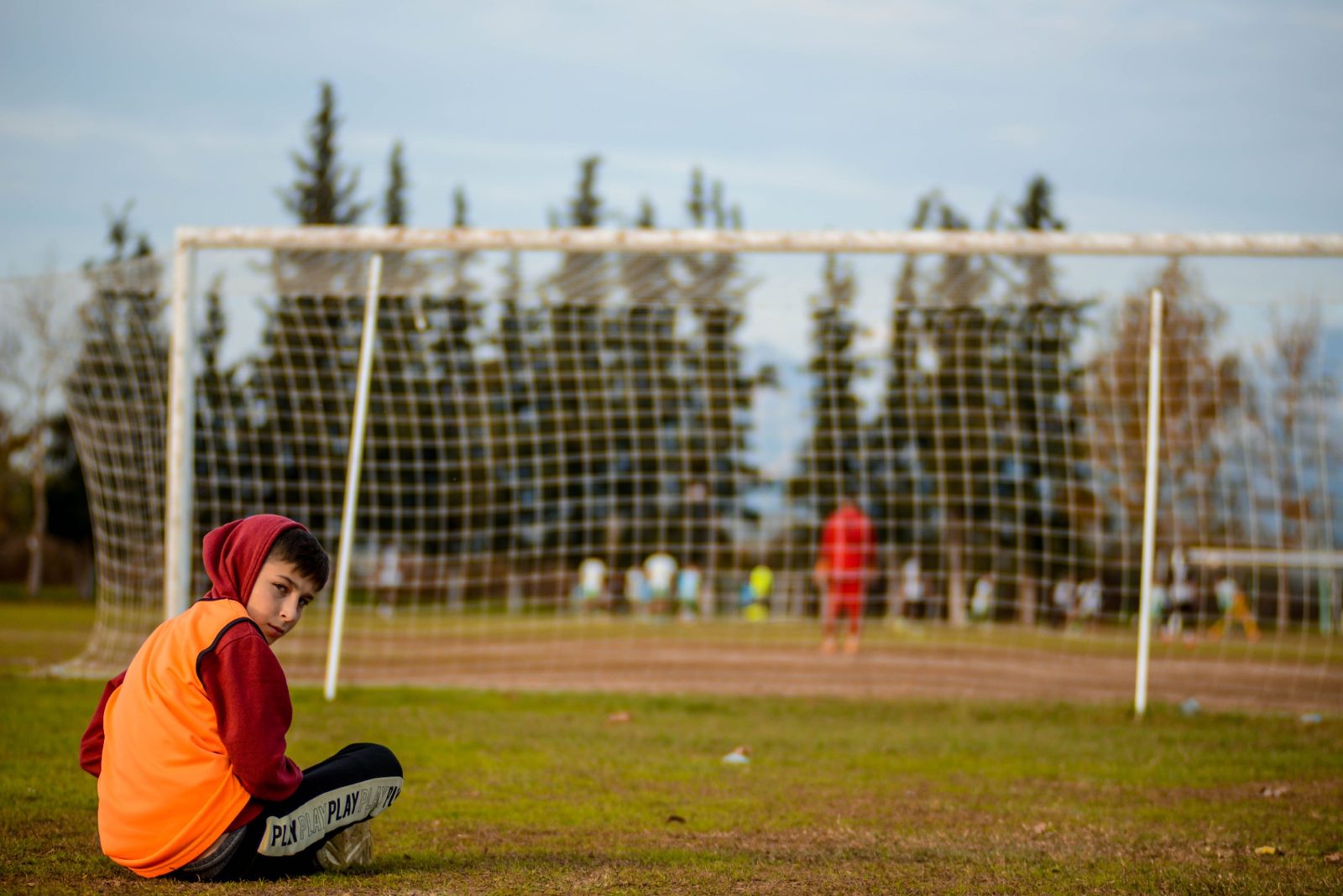
"Do you already work with children of that age?"
It is a father asking me, about his nine-year-old son who plays twice a week. He is right to ask. Many parents wonder when they should start taking their child's diet seriously.
I say no, and I explain why. It is not a question of availability, and even less a question of price. At this age, a plan full of numbers does more damage than good.
That does not mean there is nothing to do. It means there is something else to do.
1. Before twelve, the body is not chasing performance
It is growing. Needs change from one month to the next, and no plan full of numbers can keep up with that pace.
The International Olympic Committee puts it clearly in its consensus statement on youth athletic development: at this age, the goal is a healthy, robust child who enjoys the game. Optimisation will come later, if it needs to come at all.
A ten-year-old who is made to follow grams and timings does not become a better player. He becomes a child who wonders whether he is allowed to eat.
2. The habit that comes at a cost at sixteen
A child who weighs his food at ten mainly learns to be wary of it.
And it resurfaces at sixteen, just when he needs to eat more. I see it in some academy players of that age: they have absorbed a caution whose origin nobody remembers any more, and it holds them back just when their body is crying out for fuel.
A child's relationship with food is built early. It is the one thing a plan started too early damages for the long term.
3. The four basics that are enough before twelve
These are not rules to enforce. They are habits that hold with a little organisation, and that do not hold through discipline.
- Regularity. Meals at regular times, without a negotiation every time. Of everything I can tell you, this is the point that pays off most.
- A source of protein at every meal. Eggs, meat, fish, dairy, pulses. Nothing more complicated than that.
- Water as the default drink. European reference values put needs at around 1.6 litres a day between 4 and 8 years old, and 2.1 litres between 9 and 13, counting all drinks and food. Training increases that figure. More detail in hydration for footballers.
- Quick sugars around exercise, never as a reward. The European Society for Paediatric Gastroenterology recommends keeping free sugars below 5% of daily intake for 2 to 18-year-olds.
And we count nothing. Not calories, not grams, not portions.
4. Half-time sweets
It is the most widespread habit in youth football, and the most counter-productive. A sugar spike in the middle of a match is paid for in the twenty minutes that follow.
But I do not judge it, because I know where it comes from.
When I was a boy, I spent my holidays with my grandparents in Paris. They knew I loved croissants, and the croissants there are nothing like the ones back home. So every morning, they brought me two or three from the bakery. They thought they were treating me, and they were.
Looking back, I also know it was not doing me any favours. It is the same mechanism behind the sweets on the touchline or the evening fizzy drink: we give in because we love them, and the child learns that being loved means being given sugar.
5. You are the first example
A child does not apply what he is told; he copies what he sees. If fizzy drinks are on the table every evening, he will want them every evening, and no explanation will carry any weight against that.
What you pour into your own glass counts for more than anything you could ever explain to him.
Before twelve, a child's first influencer is his parent.
6. What changes at twelve or thirteen
Growth speeds up, training load increases, and needs rise faster than appetite. That is when structured coaching makes sense. What changes in adolescence is explained in why a young footballer does not eat like an adult.
Until then, your work lies elsewhere. You are building regularity, a calm relationship with food and a child who eats without thinking about it. The first meal of the day is a good place to start: breakfast for young footballers.
That is exactly the ground on which a plan will work, later on. Coaching started at the right time is worth more than three years spent counting.
Key takeaways
A ten-year-old does not need a plan. He needs meals at regular times, water, a little protein at every meal, and parents who do not turn sugar into a reward.
Those are four habits. They cost nothing, they cannot be weighed, and they decide what can be built at fourteen.
If you are asking yourself the question today, you are already doing the work. The full ten-page document is free, just below.
Your questions, my answers.
Around 12 or 13. Before that age, the body is not chasing performance but growth, and needs change from one month to the next. A plan full of numbers cannot keep up with that pace and risks creating a tense relationship with food.
Four basics are enough: meals at regular times, a source of protein at every meal, water as the default drink, and quick sugars around exercise rather than as a reward. No counting, no weighing.
No. A sugar spike in the middle of a match is paid for in the twenty minutes that follow. For a child, water is enough at half-time.
European reference values put needs at around 1.6 litres a day between 4 and 8 years old and 2.1 litres between 9 and 13, counting all drinks and food. Training increases that figure.
The full document, ten pages.
The school day, match day, snack ideas to stick on the fridge, and the nine questions parents ask me most often. Fully sourced, free. The document is currently available in French. The English version is coming soon.
It is on its way.
The document will arrive in your inbox. Remember to check your spam folder if you do not see it within a minute.
Keep reading.

Why a young footballer does not eat like an adult
Growing, learning, performing, recovering: a teenager eats for four.
What to eat in the morning, before school and before a match
The right guidelines for the first meal of the day.
What to eat before a football match?
Meal timing, foods to choose and foods to avoid on match day.
Is your child approaching 12?
When growth speeds up and the load increases, a free two-minute audit shows where they stand.