
Football nutrition for young players: the protocol aligned with the UEFA 2021 consensus.
What elite football science really says about how players should eat, from U13 to professional level. By an EREPS-certified coach and former elite player, based in Brussels.
The essentials in 30 seconds.
According to the UEFA consensus on nutrition in elite football, a young player needs far more fuel than most people think, and at the right time. In reality, most academy players eat well below what they actually need.
Carbohydrate per day, depending on intensity
Protein per day, spread out
Carbohydrate-rich meal before the match
Carbohydrate for recovery, over 4 h
Why is nutrition important in football?
Because football asks the body to repeat sprints, duels and decisions for 90 minutes, and it can only do that with enough fuel at the right time. Nutrition drives energy on match day, recovery between sessions and, for young players, growth itself.
The UEFA 2021 consensus places it at the heart of performance, health and player development.
Energy needsHow many calories does a 15-year-old footballer need?
Between 2,800 and 3,600 kcal a day, depending on age and training load. Data from English academies cited in the UEFA consensus put a U13 player at around 2,800 kcal, a U15 at around 3,000 and a U18 at around 3,600. That is as much as an adult, sometimes more.
On the pitch, the problem is almost never eating too much. It is the chronic deficit that holds back growth, recovery and progress. To estimate your player's needs, use the calorie calculator.
Pre-matchWhat should a young footballer eat before a match?
A carbohydrate-rich meal, 1 to 3 g per kilo of body weight, eaten 3 to 4 hours before kick-off. After a night's sleep, the liver's glycogen stores are half empty. This meal refills them.
It must stay easy to digest. The aim is to feel light and full of energy, never heavy. Read the full guide to the pre-match meal.
ProteinHow much protein does a teenage footballer need?
Up to 1.6 g per kilo per day, spread over 3 to 4 meals and snacks rather than concentrated at dinner. In teenagers, timing matters as much as quantity, because growth is already doing part of the work.
There is no point chasing the intake of an adult who lifts weights. More is not better: it is simply wasted. To build muscle without losing speed, read how to build muscle as a young footballer.
RecoveryWhat should a footballer eat after a match to recover?
Around 1 g of carbohydrate per kilo per hour for the following 4 hours, plus 20 to 25 g of quality protein. Straight after exertion, a large share of muscle fibres are empty.
The dressing room window is the most neglected one, and often the most rewarding. See the post-match recovery protocol. And remember to replace lost fluids: hydration for footballers.
SupplementsShould a young footballer take supplements?
In the vast majority of cases, no. The UEFA consensus advocates a food first approach: real food first, supplements only for a specific goal and under supervision.
For young players, use should remain limited, all the more so because the supplement market carries a real risk of contamination with banned substances.
Carb loadingIs pasta the night before a match a good idea?
Good intention, often poorly executed. Carbohydrate loading the day before should reach 6 to 8 g per kilo spread across the whole day, not one big, heavy, late dish.
It is timing and distribution that change everything, not the amount eaten in one go in the evening.
During the matchWhat should a footballer eat or drink during a match and at half-time?
The UEFA consensus recommends 30 to 60 g of carbohydrate per hour of play, as a sports drink, a gel or an easily digested food. In practice, half-time is the key moment to take some of it.
Test it in training, never for the first time on match day. The aim is to keep energy for the last half hour, where matches are decided.
HydrationHow much should a footballer drink?
The benchmark is simple: do not lose more than 2% of body weight in fluid during exercise. Beyond that, performance and clarity of mind drop. Weighing yourself before and after a session tells you your own losses.
After exercise, replace around 1.5 litres per kilo lost, spread over the following hours. Read the full hydration guide.
The referenceWhat is the UEFA 2021 consensus on nutrition?
It is a statement by a group of experts convened by UEFA and published in 2021 in the British Journal of Sports Medicine (Collins et al.). It brings together the available scientific evidence on nutrition for elite footballers: energy, carbohydrate, protein, hydration, supplements and the needs of young players.
This protocol takes its benchmarks and turns them into concrete, everyday habits for a player, from the academy to the first team.
A protocol born on the pitch.

Jérôme Devos
Founder of BodyFitWithMe and Head of Sports Nutrition at DrillSelected. EREPS-certified coach and former elite player, trained up to U23 at RAAL La Louvière, before devoting myself to nutrition. Today I work with players from Belgian academies, on the pitch and in the dressing room, from U13 to professional level.
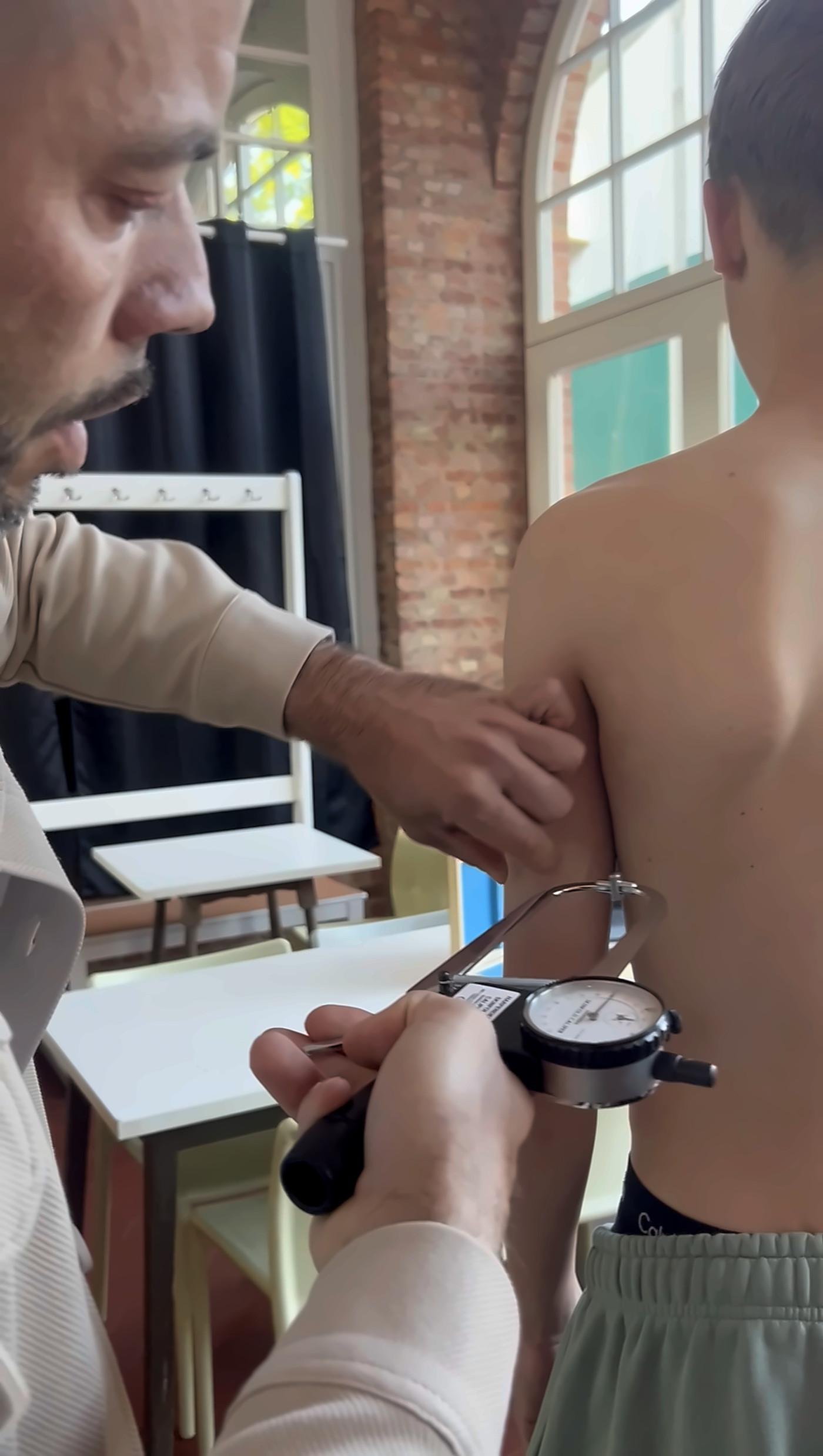

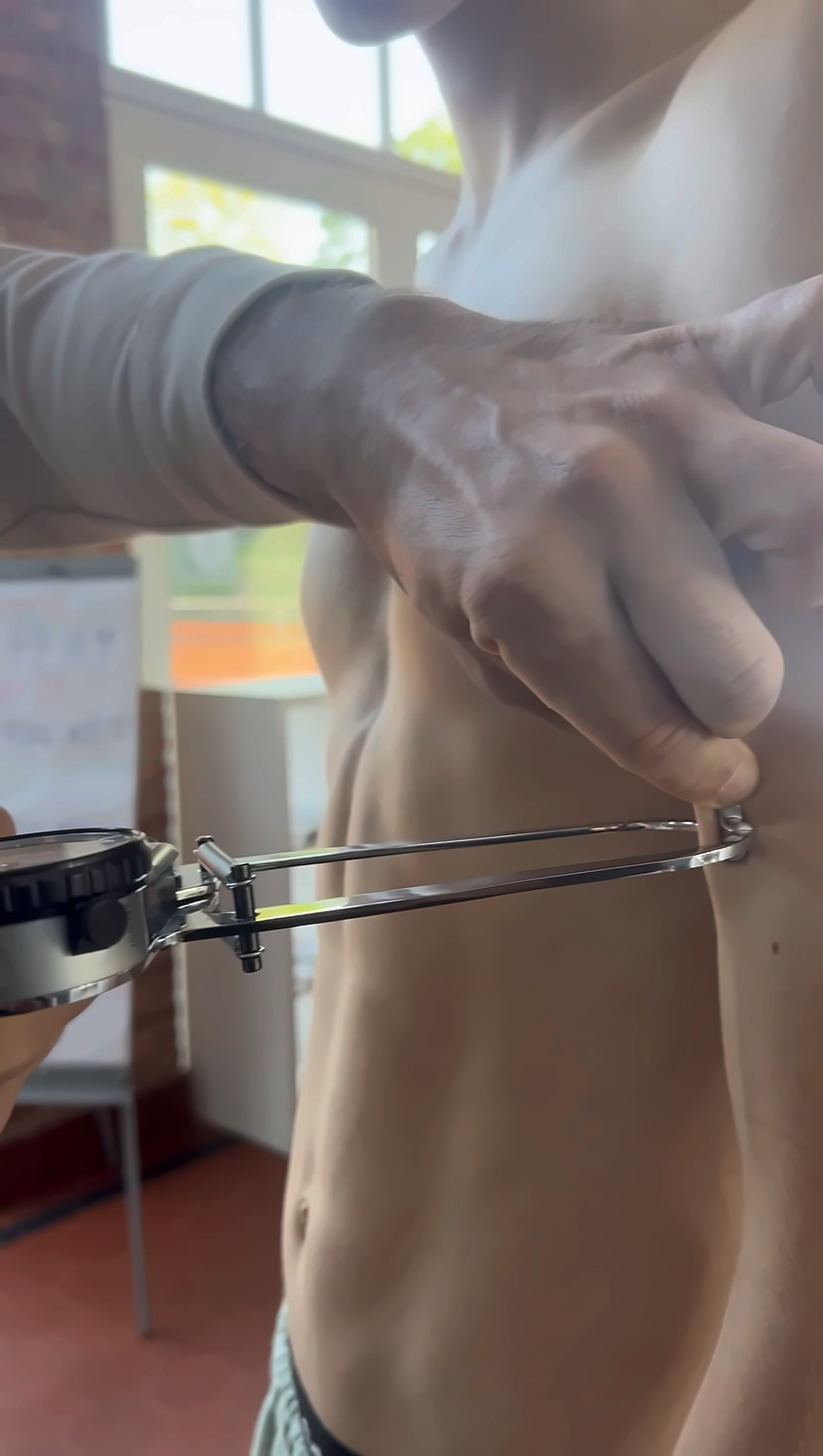

Same callipers, same measurement sites, same method at every visit: that is what makes the numbers comparable from one month to the next.
The full protocol, 32 pages.
The 9 pillars of nutrition for young footballers, based on the UEFA 2021 consensus. Get it free by email.
The full PDF is currently available in French. The English version is coming soon.
The protocol is heading to your inbox. Check your spam folder if you cannot see it within a minute.
Not ready yet? Start with the free audit · 2 min
Protocol based on the UEFA consensus on nutrition in elite football (Collins et al., British Journal of Sports Medicine, 2021). BodyFitWithMe is not affiliated with UEFA; this document draws on the published scientific literature.
The protocol, applied to your player.
A free audit to see where he stands, and what needs adjusting.