
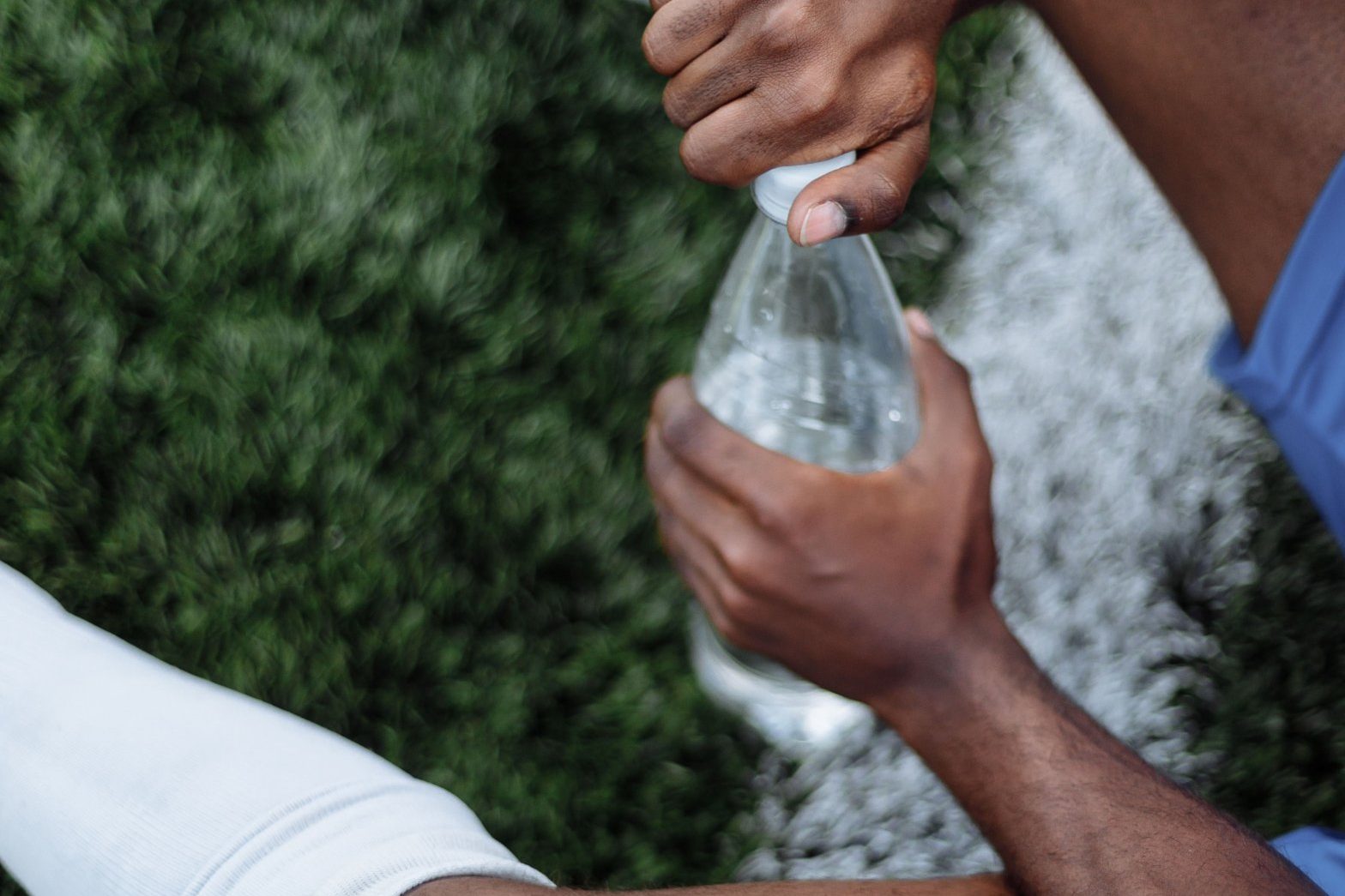
Final whistle. Your son walks off the pitch, shirt soaked, legs heavy. He has given everything for 90 minutes.
And what happens in the next 30 minutes will decide whether he is fresh for Tuesday's session, or carries leftover fatigue for 3 days.
I see this window wasted every week at the training ground. A Snickers from the vending machine, chips on the way home, or worse: nothing until the evening meal, 3 hours later.
Here is what you need to understand, and what to do in practice.
1. What really happens in his body
During the match, your son has burned 70 to 90% of his muscle glycogen stores, his main fuel. His muscle fibres show normal (but real) micro-damage. His cortisol level, the stress hormone, is at its peak.
For the 30 to 45 minutes that follow, his body is in "priority rebuild" mode. Muscles absorb nutrients 2 to 3 times faster than at any other time of day. This is what scientists call the metabolic window.
2. The ratio that changes everything: 3 to 1
The simple rule to remember: 3 grams of carbohydrate for every 1 gram of protein.
Carbohydrates restore glycogen. Protein repairs muscle fibres. Together, they speed up recovery by 50% compared with carbohydrates alone.
For a U15 to U18 player, aim for roughly 60 to 80 g of carbohydrate and 20 to 25 g of protein in this window.
3. Three post-match snacks that really work
Option 1: the simplest
Banana and chocolate milk (500 ml)
Chocolate milk is one of the most studied recovery drinks in the world. A naturally ideal carbohydrate to protein ratio. The potassium in the banana makes up for electrolyte losses.
Option 2: if he is hungry
Wholemeal sandwich with chicken breast and honey
Medium-GI carbohydrates, lean protein and fast sugars from the honey to kick-start insulin. Prepare it on the morning of the match and slip it into the kit bag.
Option 3: for the ambitious
Homemade smoothie: milk, banana, oats, honey and whey
Liquid, so it digests very quickly. Ideal after an intense match when the appetite for solid food has not returned yet. Made in advance and kept in a flask.
Waiting for the evening meal
This is the mistake I see most often in academy dressing rooms. The player finishes his match at 1 pm, the family meal is at 7 pm. Six hours lost.
During those 6 hours, his body rebuilds in slow motion. The next morning, his legs are heavy. At Tuesday's training, he is short of energy. And nobody makes the connection.
4. The evening meal: finishing the job
The post-match snack starts the recovery. The evening meal completes it.
The ideal structure, kept simple:
- A source of protein: chicken, fish, eggs (20-30 g).
- Complex carbohydrates: rice, wholewheat pasta, sweet potato (60-100 g cooked).
- Cooked vegetables: for micronutrients and digestion.
- Fruit for dessert: kiwi or pineapple (natural anti-inflammatories).
This evening meal follows the same logic as the pre-match meal: the right foods, at the right time, in the right amounts. The goal is not to "eat more", it is to eat right. And rehydration matters as much as the meal: see hydration for footballers.
Lukas, KAA Gent U18
Before we structured his post-match nutrition, Lukas complained of heavy legs after every game. He struggled to back up Sunday matches with Tuesday's tactical sessions.
We put a simple protocol in place: a snack prepared in advance in his bag, a structured evening meal and planned post-match hydration.
The result within a few weeks: he arrives fresh at Tuesday's session. And over a year of coaching, he has gained around ten kilos, without ever losing explosiveness. The full method is in how to build muscle as a young footballer.
Key takeaways
Nutritional recovery is not a detail. It is what allows your son to play match after match without losing intensity, without accumulating fatigue and without fading at the end of the season.
The 30 minutes after the final whistle are worth as much as the 90 before it. Most players waste them through a lack of information. Not a lack of willpower.
Keep reading.
What to eat before a football match?
Meal timing, foods to favour and foods to avoid on match day.
Hydration and football: the complete guide
How much to drink before, during and after a match, and why 2% is enough to bring your level down.

What your fitness coach is not telling you
Why nutrition makes the real difference in a football academy.
Is your son's nutrition matching his ambitions?
A free 2-minute quiz to find out exactly where he stands and what needs adjusting.