
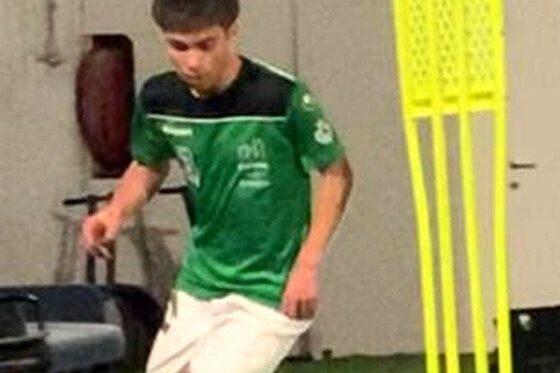
You train hard. You follow the programme to the letter. You give everything in every session. And yet, you are stalling.
Your legs are heavy on Fridays. You recover poorly between sessions. You run out of energy in the second half. And you do not understand why, when you are doing everything you are asked.
The answer is not in your physical programme. It is in what you eat.
The fitness coach's role vs the role of nutrition
In Belgian academies (KAA Gent, KRC Genk, Anderlecht), professional staff have long understood that physical training and nutrition are two complementary disciplines. Yet the vast majority of young players only have access to one of the two.
Your strength and conditioning coach plans your workload. He structures your sessions, manages your intensity and monitors your muscle recovery. That is his field, and he knows it well. But there is one variable he does not control: what you eat.
A high-performance engine running on poor fuel still turns over, but never at its full potential. A fitness coach plans your load. A nutrition coach makes sure every session really counts.
What happens when you train without eating properly
When you train, you create muscle micro-damage. That is normal, and even essential for progress. But for this damage to repair, your body needs specific nutrients, at the right time. Without them:
- Recovery is incomplete. You arrive at the next session with muscles that have not finished rebuilding.
- Your energy level drops. Without well-stocked glycogen stores, you run out of fuel from the 60th minute.
- You get injured more easily. A body in nutritional deficit is more vulnerable: tendons, ligaments, bones. And once injured, what you eat while sidelined matters even more.
The 3 mistakes I see every week
Mistake 1: ignoring post-session recovery
In the 30 to 45 minutes after exercise, your body is in maximum rebuild mode. Most players let this window close. The result: recovery takes 48 hours instead of 24. That is exactly the subject of the 30 minutes after the match.
Mistake 2: poor timing around sessions
Eating too close to training means heavy digestion and lower performance. Not eating enough beforehand means a lack of energy from the first minutes. Nobody teaches this to young players. The most neglected slot is covered in what to eat between school and evening training.
Mistake 3: quantities never adjusted to the load
A rest day on Monday and a two-session Wednesday do not have the same needs. Yet most players eat the same thing every day. Adapting intake to the schedule is one of the simplest and most effective things you can do. To estimate real needs: how many calories a young footballer needs.
What the staff at the big Belgian academies do
In professional set-ups, players have a strength and conditioning coach, a tactical coach, a physio and sometimes a sports psychologist. How many have a dedicated nutrition coach? Almost none.
And yet, at the top level, nutrition is an integral part of the programme: calculated menus, post-session snacks prepared in advance. The difference between a player who stalls and a player who progresses is often not his talent. It is what happens away from the pitch.
Nutrition is not a diet
Coaching a young footballer does not mean imposing a restrictive diet. It means structuring his eating around his training sessions and matches. It means teaching him to eat enough, often more than he eats today, with the right foods, at the right times. The practical starting point is the pre-match meal.
What it changes in practice
The players I coach apply simple principles, in a structured and consistent way. Here is what they notice within a few weeks:
- Faster recovery between sessions
- Fewer heavy legs at the end of matches
- Better concentration in training
- More visible physical progress, depending on the goal
- Fewer minor injuries
Key takeaways
Your fitness coach is doing his job. Now it is time to do yours.
Nutrition is not an option reserved for professionals. It is a skill you can work on, and it can transform your season. Every player is different: your position, your build and your goal shape what you really need. That is why a personalised plan always makes the difference.
Keep reading.

The 30 minutes after the match
The window most young players waste, and how to make the most of it.
What to eat before a football match?
Meal timing, foods to favour and foods to avoid on match day.
Why a young footballer does not eat like an adult
Growing, learning, performing, recovering: a teenager eats for four.
Is your son's nutrition matching his ambitions?
A free two-minute audit to find out exactly where he stands, and what needs adjusting away from the pitch.