
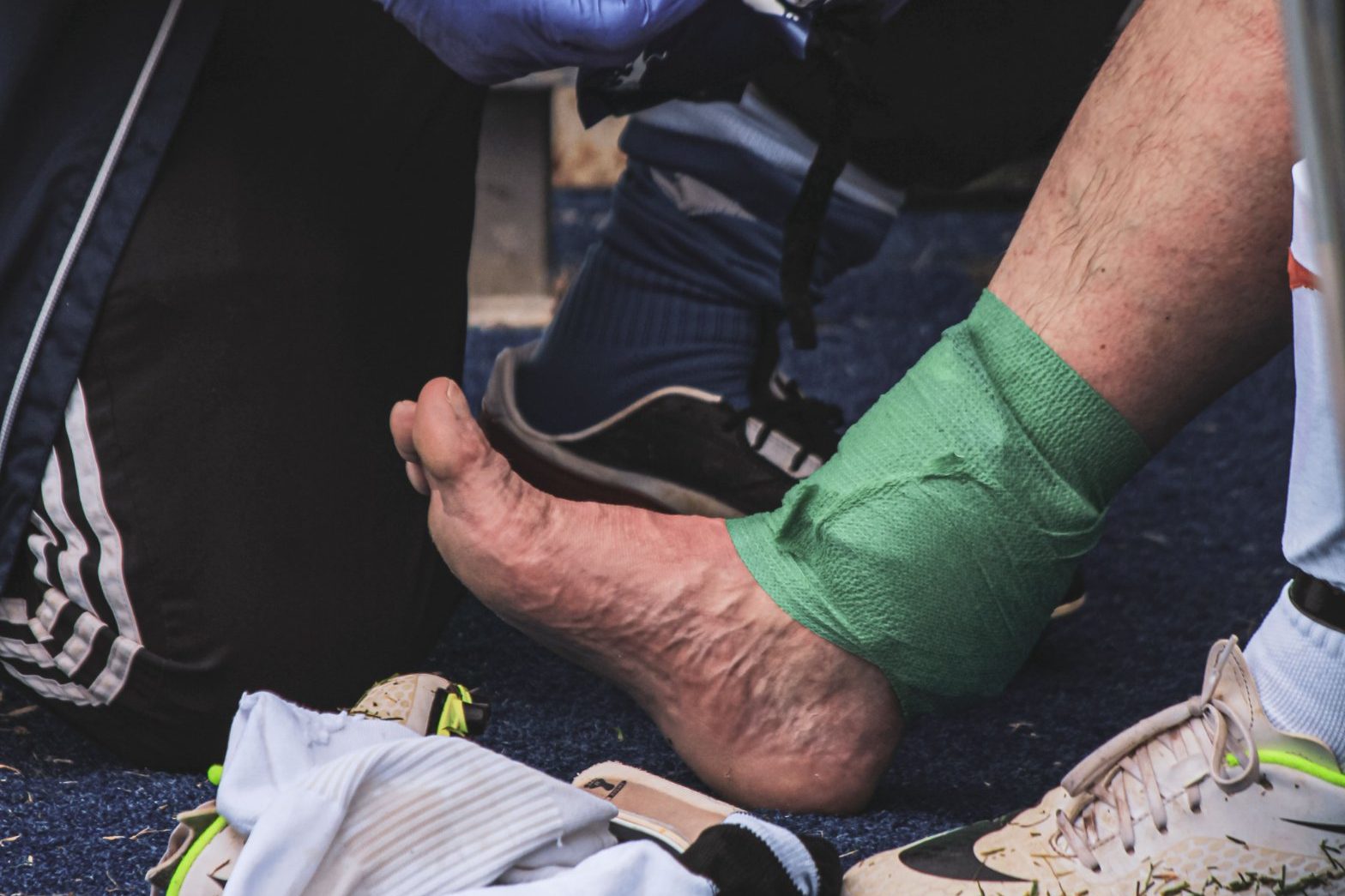
The scene is always the same. Ligament, stress fracture, muscle tear. The player leaves the doctor's office with a recovery time, and in the car, someone says the sentence: "we will have to be careful now that he is not training."
The intention is good. The consequence is bad.
An injured teenager who cuts his intake ends up in a deficit at the exact moment his body has the most work to do. Repairing tissue, rebuilding bone, managing inflammation: all of that uses energy. When it runs short, the body goes looking for it where it is available, which means in the muscle.
The player loses weight, the scales reassure the family, and he loses exactly what he will have to rebuild over the next three months. Here is how an injury is really managed through meals, phase by phase.
1. Muscle loss starts within 48 hours, not three weeks
This is the point almost every family is unaware of. Changes in muscle cell activity appear within the first 48 hours of immobilisation, and measurable muscle loss has been documented after just five days.
The first two weeks are the most destructive. They are also the weeks when nobody steps in on the nutrition side, because everyone is waiting for the first physio appointment.
Two mechanisms combine. Muscle protein synthesis drops. And the muscle becomes less responsive to the protein it receives: this is called anabolic resistance. The same meal that built muscle when he was playing has less effect now that he is sidelined.
2. Energy: never put an injured player on a diet
Before talking about protein, overall energy intake has to be secured. A deficit speeds up muscle loss whatever the protein intake, because amino acids get used as fuel instead of as building material.
The opposite mistake exists too. The bored player who compensates by snacking, who gains fat while his muscle mass melts away. When he comes back, he weighs the same as before, but it is no longer the same body.
An injured player's energy expenditure drops far less than people imagine. A growing teenager getting around on crutches and going from one rehab session to the next is not burning half of what he used to.
In practice, for most academy players, the adjustment comes down to removing the equivalent of the training snack and leaving everything else alone. That is all.
3. Protein: more of it, and above all better spread
This is the number one lever during immobilisation. Since the muscle responds less well, it needs a stronger signal, more often. What changes in practice:
- The amount goes up, not down. An injured player's daily intake sits at the level of, or even above, that of a player under full training load. Counter-intuitive for a parent watching their son sit still on the sofa.
- Four servings rather than two. A teenager who has 5 g of protein at breakfast and 50 g at dinner wastes half of his day. Distribution matters as much as the total.
- Quality, which means leucine. Eggs, dairy, meat, fish: these are the sources that trigger muscle synthesis best.
- The evening meal. The night is long. A proper protein intake at dinner limits overnight breakdown.
Breakfast is almost always the first meal to fix. The precise values are calculated according to weight, age and stage of growth. A 14-year-old and a 78 kg U21 do not have the same target.
What really slows the return to play
1. "Preventive" restriction. Cutting portions to avoid gaining fat amounts to sabotaging tissue repair. Fat is managed through fine adjustment, never through drastic cuts.
2. The supplement bought in a panic. An injured player, or the people around him, look for outside help. With a minor, food is sorted out before any talk of supplements, and any supplement is decided with the medical staff treating the injury, not in an online shop. The full framework is here: creatine, whey and supplements for young footballers.
3. Alcohol, for adult players. For U21 and U23 players, it is the first thing to cut during an injury, not the last: it harms both protein synthesis and healing.
4. The healing nutrients
Beyond protein, four points deserve attention. None of them replaces the first two adjustments; all of them complement them.
Omega-3s. They improve the muscle's sensitivity to amino acids, which directly addresses the problem of anabolic resistance. Two portions of oily fish a week, plus the right oils. This is food, not a supplement.
Vitamin D and calcium. Non-negotiable for a fracture, a stress fracture or a bone injury. In Belgium, vitamin D status is frequently low from October to April, and this is one of the rare situations where a blood test is justified.
Vitamin C. Directly involved in making collagen, and therefore in repairing tendons, ligaments and skin. Fruit and vegetables every day, without exception, including the days when he does not feel like eating anything.
Zinc and iron. Zinc supports healing. Iron is worth checking when fatigue persists beyond what the injury explains.
The evidence behind this protocol
On the speed of muscle loss: research on immobilisation describes changes in gene expression from 48 hours onwards and significant muscle loss after five days of inactivity (Tipton, Sports Medicine, 2015; Wall and Van Loon, British Journal of Sports Medicine, 2014).
On energy intake: a negative energy balance speeds up muscle loss during immobilisation, and an overall drop in intake mechanically pushes protein below the threshold needed to maintain muscle mass (Journal of Athletic Training, 2020).
On collagen and connective tissue: the landmark study (Shaw et al., American Journal of Clinical Nutrition, 2017) shows that taking 15 g of vitamin C-enriched gelatine one hour before loading exercise doubles blood markers of collagen synthesis. An important caveat: this work involved eight healthy adults, not teenagers. It is a serious lead, but it does not apply to a minor without the medical staff's approval.
That is the house rule: what is documented is presented as such, and what is not is never sold as a certainty.
5. The three phases of return to play
An injury is not one uniform block. Needs change, and the plan has to change with them.
Phase 1, immobilisation. Protecting the muscle. High, well-spread protein, stable energy, healing micronutrients. The shortest and most decisive phase.
Phase 2, rehabilitation. Loading work returns, the muscle becomes responsive to stimuli again. Intake around strength work regains its importance, and carbohydrates rise with the load.
Phase 3, back with the group. This is the phase with the risk of relapse, often because the player returns to the team's intensity without having restored the intake that goes with it. The post-exercise protocol becomes central again: the 30 minutes after the match.
6. What nobody manages: appetite and morale
An injured player often eats badly because he feels bad. He has lost his routine, his teammates, his place in the group. His appetite drops, or he takes refuge in sugar.
This is not a question of willpower and it is not solved with a calorie chart. What works is giving him a measurable goal again while he cannot play.
Many players come back from injury in better physical shape than before, precisely because it is the only period of the season when nutrition becomes the main playing field.
Key takeaways
Five habits to apply from tomorrow:
- remove nothing without a reason backed by numbers;
- fix breakfast first;
- spread protein across four servings;
- oily fish twice a week, fruit and vegetables every day;
- weigh once a week on the same day, looking at body composition rather than the number.
The first two weeks decide most of the outcome. That is when muscle is protected, not when the physio gives the green light.
An injury is not something you simply endure. You get through it with a plan, like the rest of the season.
Keep reading.
Creatine, whey: what a young footballer can really take
What is useful, what is pointless, and from what age.
The 30 minutes after the match
The window most young players waste, and how to fill it.
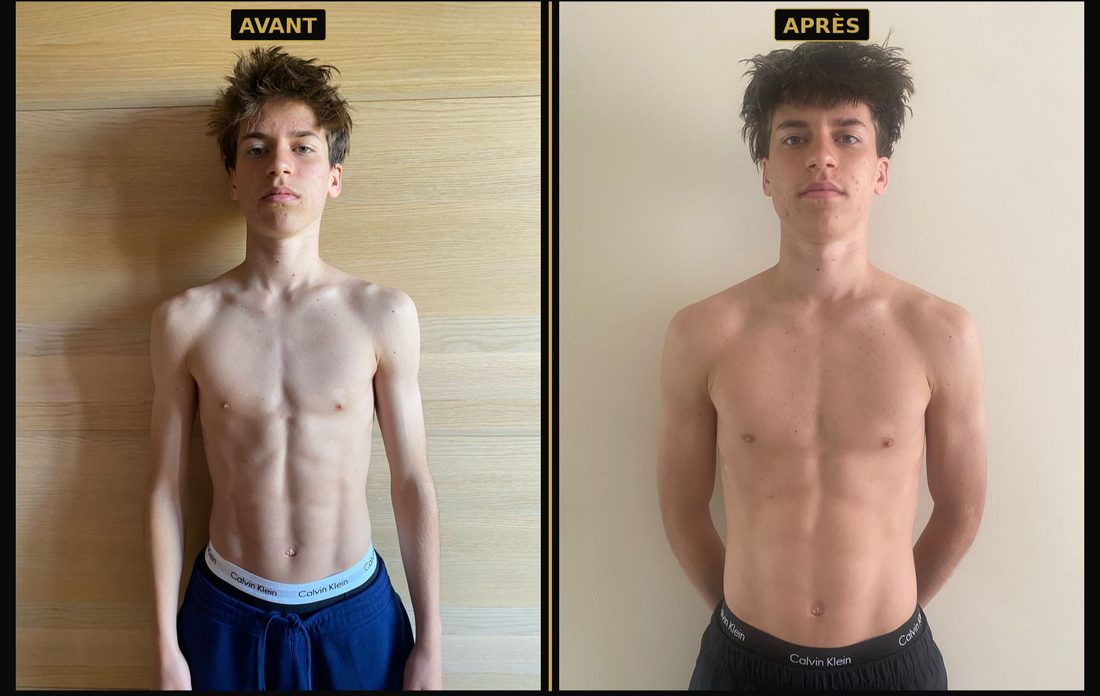
Building muscle without fat
The method for gaining lean mass as a young footballer aged 15 to 21.
You get through an injury with a plan.
A free two-minute audit to see where your son stands, and protect his muscle from the very first weeks out.