
Supplements for young footballers: creatine, whey and what a young player can really take
The question always comes from the dressing room, never from a professional. Here is the real framework, what the scientific bodies say, and the order in which to approach things when it comes to a teenager in an academy.
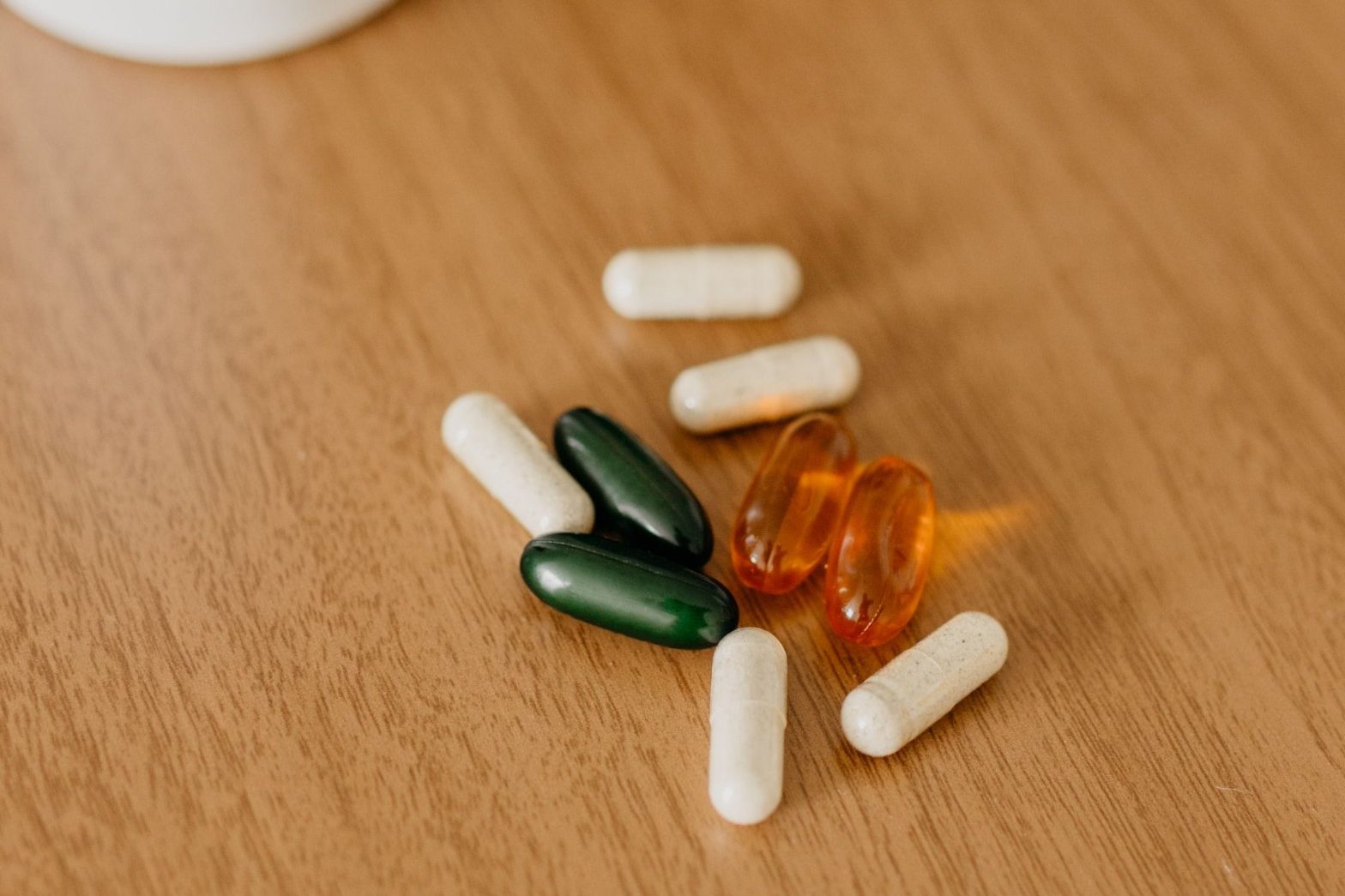
The question always comes from the dressing room
A teammate takes it. A video claims it is essential. An older player says it is what changed everything for him. And in the evening, at home, your son asks the question. Often clumsily, often at the wrong moment, and you have neither the time nor the information to answer properly.
That is exactly where the game is played. Because in nine cases out of ten, the young player ends up looking into it alone, and the least reliable source is also the most accessible. A parent who refuses outright without explaining does not close the subject, they move it out of sight.
This article is not a shopping list. It is the framework I use with the families I work with, from U13 to professional level, so that the decision is made with method rather than by imitation.
The rule that never changes
A supplement does not make up for an incomplete diet. It does not make up for a skipped breakfast, a forgotten snack before training or three evenings at 7 pm without a structured meal. It comes afterwards, never instead.
The International Olympic Committee consensus on dietary supplements is explicit on this point: a supplement should only be considered when safety is assured and a real benefit to health or performance is likely, bearing in mind that for the vast majority of products on sale, evidence of effectiveness remains limited. The same text points out that a full nutritional assessment should precede any decision to supplement.
In a 15-year-old player, what he eats over seven days matters infinitely more than any powder. Until his weekly eating is properly built, the question of supplements is premature.
Creatine, without myths and without dogma
It is the most studied molecule in all of sports nutrition, and paradoxically the most misunderstood. The IOC consensus places it on the very short list of supplements whose performance benefit is genuinely documented, alongside caffeine, certain buffering agents and nitrates. On safety, the ISSN position stand states that supplementation, short and long term, is well tolerated in healthy individuals in the available studies.
What the scientific bodies really say for a minor
This is where a lot of content goes wrong, in both directions. Some claim it is banned before 18, which is false. Others present it as harmless at any age, which is just as false. The ISSN position sets out specific conditions: the young athlete must be past puberty, engaged in serious, competitive training, properly supervised with appropriate precautions, and already following a balanced and complete diet.
In other words, it is not a question of the age on an ID card. It is a question of biological maturity, actual training load and the quality of supervision.
My position with the players I coach
Possible for a post-pubertal player who is seriously committed, under supervision, with the agreement of his parents and doctor. Never as a first step, never before the week's eating structure is in place, and never because a teammate takes it.
| Point | What you need to know |
|---|---|
| Form | Monohydrate only. It is the only form that is genuinely documented. The more expensive versions offer no proven advantage. |
| Loading phase | Unnecessary. A stable daily dose gives the same result within a few weeks, with much better digestive tolerance. |
| Kidneys | No kidney damage documented in healthy individuals in the available literature. The myth comes from confusing creatine with creatinine on a blood test. |
| Weight gain | Slight water retention within the muscle is possible at first. It is not body fat, and it does not hinder a footballer. |
| Certification | An anti-doping certified product is mandatory. This point is non-negotiable for an academy player. |
Whey: a convenient food, not a magic product
Protein powder is neither a medicine nor a steroid. It is a concentrated, convenient food, nothing more. So the real question is never "is whey good for him", but "is he already reaching his protein intake with real meals".
For teenage athletes, recent research puts needs at around 1.4 to 2 g of protein per kilo of body weight per day. For a 65 kg player, that is roughly 90 to 130 g a day. This is achievable without any powder: eggs in the morning, meat or fish at two meals, dairy products, pulses.
Whey becomes relevant in three specific situations, and only in those:
- Getting home late from training, when the player gets in at 10 pm and cannot manage a full meal.
- School plus training days when the time available to eat is objectively too short.
- Difficult muscle gain, in a player who fills up quickly and cannot increase his food volume.
In every other case, a skyr, three eggs or 150 g of chicken breast do exactly the same job, for less money and with more micronutrients.
Micronutrients: where the real deficiencies hide
This is the point most families overlook. The subject that worries everyone is creatine. The subject that actually causes problems on the pitch is vitamin D and iron.
Vitamin D
A study of 131 young footballers with an average age of 15.6 found insufficient levels in 42.8% of them. The sports medicine literature consistently points to the same determining factor: sun exposure. In Belgium, between October and March, skin synthesis becomes marginal. The consequences are not trivial, with an increased risk of stress fractures and probably of injury.
That is why I do not supplement vitamin D automatically all year round. I look at the time of year, the context and, where possible, the blood level.
Iron
Needs rise sharply in adolescence, to support growth, increased blood volume and the development of muscle mass. Deficiency can remain completely silent or show up as fatigue and a drop in performance. A player who fades at the end of matches for no clear reason deserves a blood test before he deserves a supplement.
Important point: iron is never supplemented blindly. Unnecessary intake in a player whose stores are already adequate brings no benefit and is not without risk. The dose is decided on the basis of a blood test and with a doctor.
Magnesium and omega-3
Two reasonable supplements, provided you do not expect anything spectacular. Magnesium can support recovery and sleep in a player with a high load. Omega-3s are useful when fish intake is low, which is common in teenagers. Neither transforms a player. Both can help a body under strain cope better.
What a minor should never take
This list is short and allows no exceptions.
- Pre-workouts. Stimulant doses designed for adults, opaque blends, effects on sleep and heart rate. No benefit for a growing player.
- Fat burners. No justification in a teenager, whatever his weight. A young player who needs to change his body composition does so through diet and training, under supervision.
- Hormone boosters and "natural testosterone" products. Not up for discussion for a minor.
- Uncertified products. The IOC consensus points out that the inadvertent ingestion of substances banned under anti-doping codes is a known risk with certain supplements. For an academy player with the prospect of a professional contract, this risk is disproportionate.
The right order: assessment first, decision second
Here is the sequence I apply every time, and there is nothing complicated about it.
- Structure the week's eating. Number of meals, timing around training, actual protein and carbohydrate intake. This step alone solves most of the problems blamed on a lack of supplements.
- Observe over several weeks. Weight, energy at the end of matches, sleep quality, recovery between sessions.
- Confirm with a blood test if a warning sign persists. Ferritin, vitamin D, basic markers. We measure before we correct.
- Decide with the parents and the doctor, product by product, with a specific goal and a defined duration.
A supplement chosen without the first three steps is not a performance strategy. It is an expense that reassures the adult without changing anything for the player.
What I tell parents
When a parent asks me whether their son should take something, I almost always give the same answer: not yet. Not on principle, but because in the vast majority of cases there is still a lot to gain from what he actually eats from Monday to Sunday.
A player who structures his six weeks of pre-season properly progresses more than one who adds three tubs to a haphazard diet. It is a harder sell, but it is what I see every week with the players I follow in academies.
And when supplementation does become relevant, it takes its proper place: on top of work that is already solid, with a clear framework, the parents' agreement and a measurable goal. To build that foundation, start with the complete guide to nutrition for young footballers.
Sources
- Kreider RB et al. International Society of Sports Nutrition position stand: safety and efficacy of creatine supplementation in exercise, sport, and medicine. Journal of the International Society of Sports Nutrition, 2017;14:18.
- Buford TW et al. International Society of Sports Nutrition position stand: creatine supplementation and exercise. Journal of the International Society of Sports Nutrition, 2007;4:6.
- Maughan RJ et al. IOC Consensus Statement: Dietary Supplements and the High-Performance Athlete. British Journal of Sports Medicine, 2018;52(7) and International Journal of Sport Nutrition and Exercise Metabolism, 2018;28(2).
- Prevalence and Treatment of Vitamin D Deficiency in Young Male Soccer Players in Winter. Study of 131 young footballers, average age 15.6.
- Swiss Society of Paediatrics. Nutrition for children and adolescents in sport. Protein, iron and vitamin D needs in young athletes.
- Sports medicine reviews on vitamin D status in athletes and its link with sun exposure and injury risk.
This article is for information only and does not replace medical advice. Any supplementation in a minor must be discussed with the parents and a healthcare professional, based on an individual assessment.
Keep reading.

Nutrition for young academy footballers
Needs, pre-match, hydration, recovery and growth: the complete guide, from U13 to professional level.
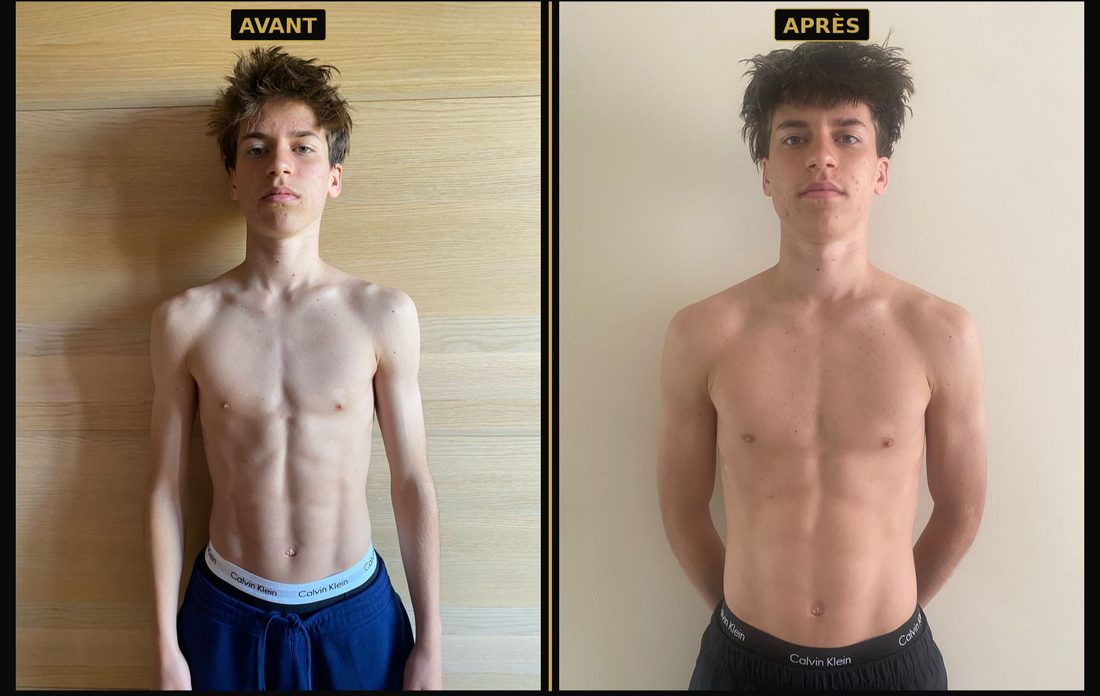
Building muscle without fat
The method for gaining lean mass in a young footballer aged 15 to 21.
How many calories does a young footballer need?
The real calculation of needs, from 13 to 21, and how to check it.
Before supplements, the foundation.
The free audit reviews what your son really eats over a full week and identifies what is limiting his performance today.