Nutritionist, dietitian or nutrition coach: who to choose for a young footballer?
You are looking for a sports nutritionist in Brussels for your son. It is the first word that comes to mind, and that is normal: nobody explains the difference between a nutritionist, a dietitian and a nutrition coach. Yet these three profiles do not meet the same need. Here is who does what, so you make the right choice from the start.
A parent looking for help with their son's eating types the word they know: nutritionist, sometimes dietitian. They are not looking for a title. They are looking for someone who helps their child eat better and progress on the pitch.
The problem is that these words cover different professions, with different training, frameworks and goals. Choosing well starts with knowing what the player needs.
1. The dietitian: a healthcare profession
In Belgium, dietitian is a protected title. Practising requires a recognised degree and an official approval. It is a healthcare profession in its own right.
This is the person to see for a medical condition, an allergy, digestive problems or a diet prescribed by a doctor. Their field is health and care.
2. The nutritionist: a broad term
The word covers very different profiles: a doctor specialising in nutrition, a nutrition science graduate, or a practitioner with less regulated training.
That is why it is worth always checking the person's training and specialism, beyond the title on display.
3. The sports nutrition coach: performance
Their role is not to treat, but to align eating with training, matches, growth and the player's goals.
It is hands-on, ongoing work: adapting meals to the fixture list, measuring progress, adjusting every week. Building muscle, getting lean, recovering better, handling the load of an academy season: that is their field.
4. Who to see, depending on the situation
| The situation | The right person |
|---|---|
| Medical condition, allergy, digestive problems, therapeutic diet | Doctor or dietitian |
| Building muscle, getting lean, recovering better | Sports nutrition coach |
| Organising meals around training and matches | Sports nutrition coach |
| Coming back from injury | The doctor first, then the coach for return-to-play nutrition |
The nutrition principles for injury are covered in the article on nutrition and injury.
The 5 questions to ask
- What is your training, and is it recognised?
- Do you know football and its calendar (training, matches, boarding, growth)?
- How do you measure progress: the scales alone, or body composition?
- How often is the follow-up?
- What do you do if a medical issue comes up?
A good professional answers all five clearly. Especially the last one.
5. What I offer, and what I do not do
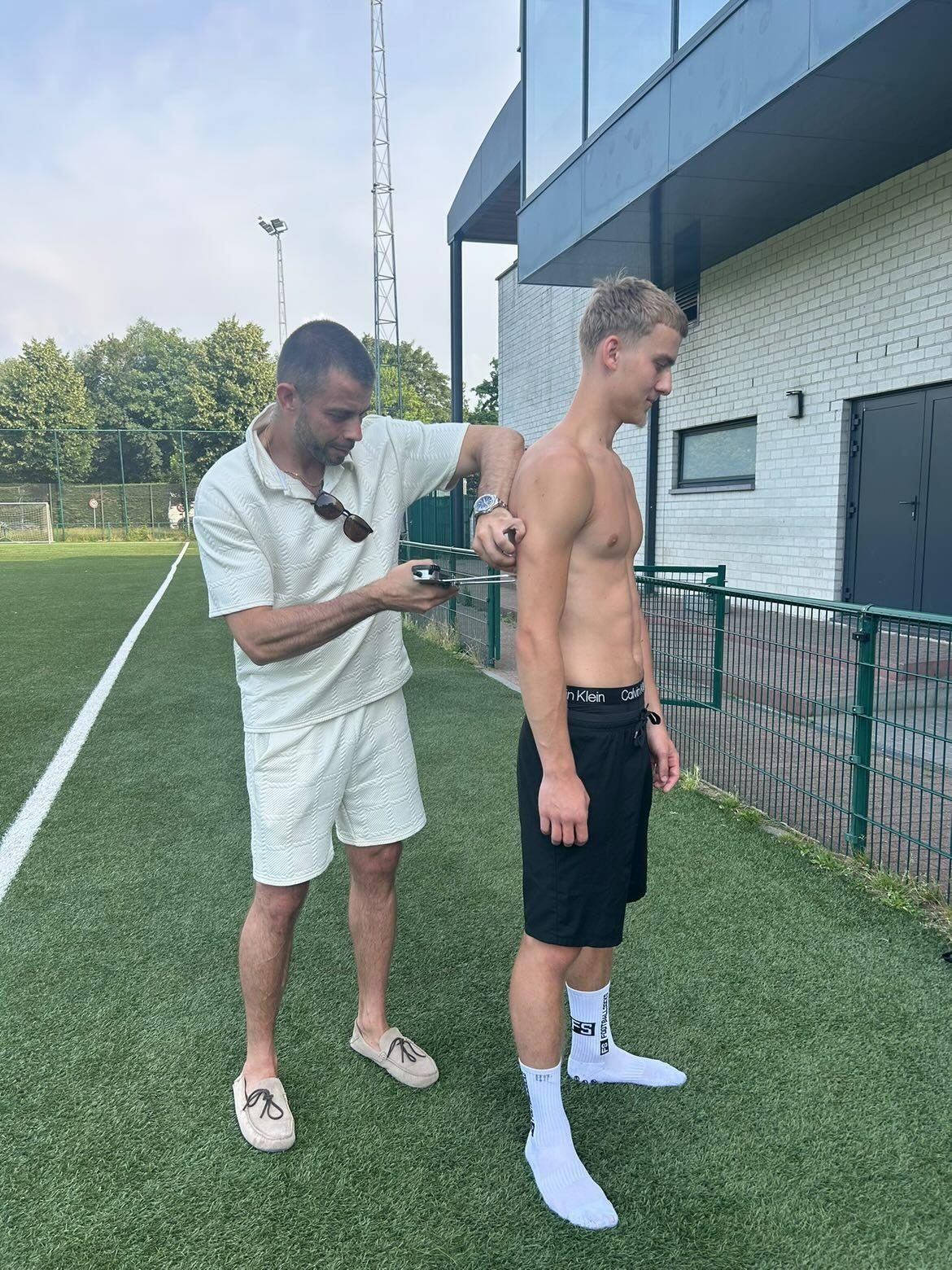
I am Jérôme Devos, an EREPS-certified sports nutrition coach in Brussels. I work with footballers from U13 to professional level, in person and remotely: a plan built around the player's fixtures, weekly follow-up and skinfold measurements to track body composition. The full approach is on my method page, and measurement in the article on body fat.
I am neither a doctor nor a dietitian. When a medical question comes up, I refer the player to their doctor or dietitian, and we work together.
Frequently asked questions.
In Belgium, dietitian is a protected title: it requires a recognised degree and an official approval, and it is a healthcare profession focused on medical conditions and therapeutic diets. Nutritionist is a broader term used by very different profiles. Always check the person's training and specialism.
For a performance goal (building muscle, getting lean, recovering better, organising meals around training and matches), a sports nutrition coach who specialises in football is the right person. For a medical condition, an allergy or a therapeutic diet, it is the doctor or the dietitian.
Yes, for return-to-play nutrition, once the doctor has made the diagnosis and set the medical framework. The coach then adjusts intake to the immobilisation phase and to the return to training, in contact with the medical staff.
Keep reading.
Nutrition for young academy footballers: the complete guide
Needs, pre-match, hydration, recovery, muscle gain and growth.
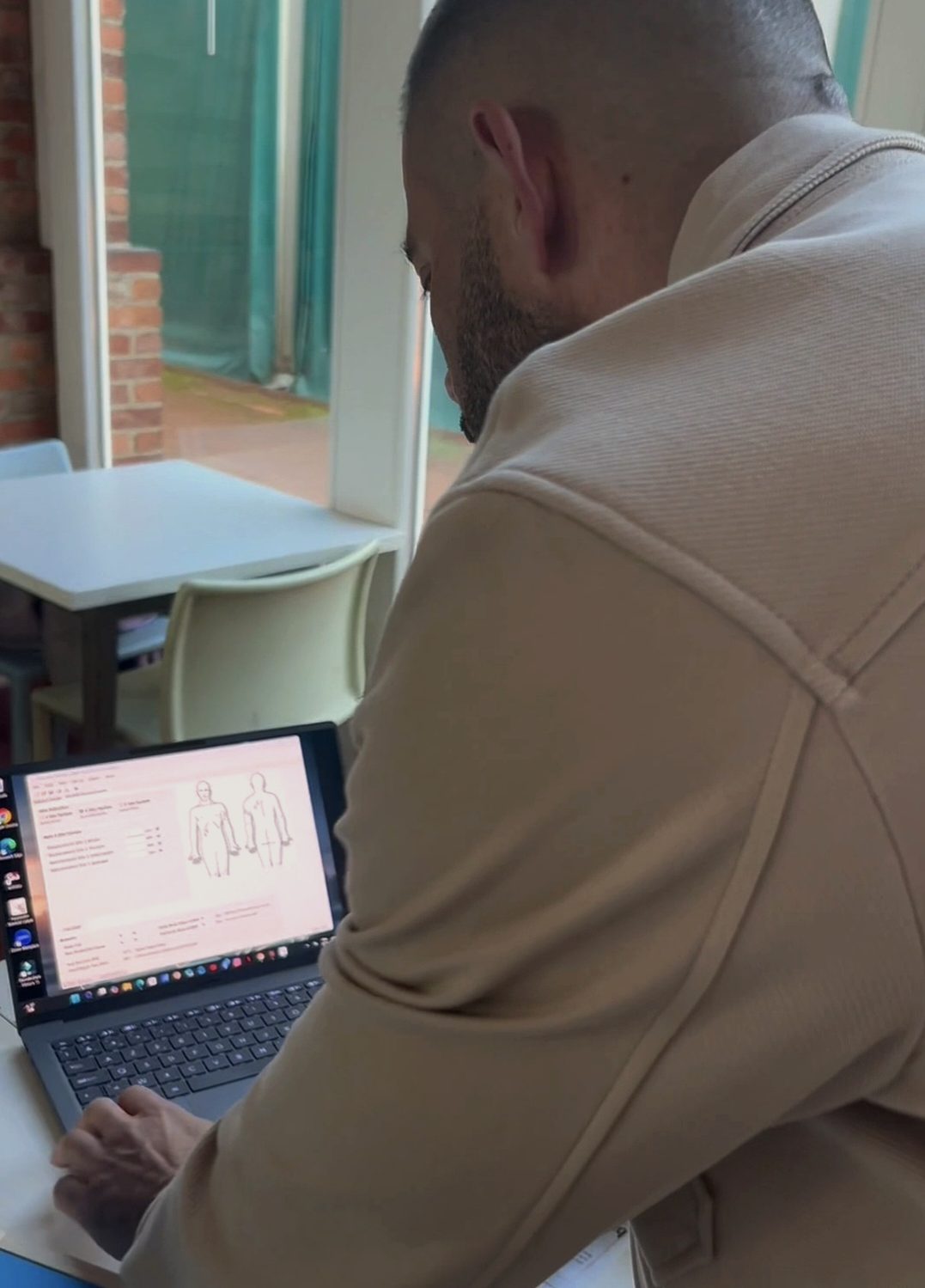
Body fat in young footballers: why the scales are not enough
Callipers, DEXA, smart scales: what each method is worth.
Creatine, whey, supplements: what a young footballer can really take
What is useful, what is not, and from what age.
Looking for the right support for your son?
A free two-minute audit to see where he stands, and whether sports nutrition coaching fits what he needs.